Hilton Head Dolphin Tours: The Complete Guide to Broad Creek's Wild Atlantic Bottlenose Dolphins
If you're planning a trip to Hilton Head Island and dolphins are on your must-do list, this is the guide that'll save you a few hours of homework. We'll walk through what a Hilton Head dolphin tour actually looks like on a typical morning on Broad Creek, the wildlife you can expect to see beyond the dolphins themselves, when to go for the best chances of an up-close encounter, what to bring, and how to pick the right tour for the people in your group. Whether you're traveling with toddlers, organizing a family reunion, or just looking for a beautiful 90 minutes on the water, you're in the right place.
A note before we start:
this is the most complete page we'll write on the topic. Bookmark it. We'll link out to deeper pieces on specific questions (sunset cruises, what to bring with kids, the science behind dolphin behavior, and so on) as those go live. Think of this as your home base.
What a Hilton Head Dolphin Tour Actually Is
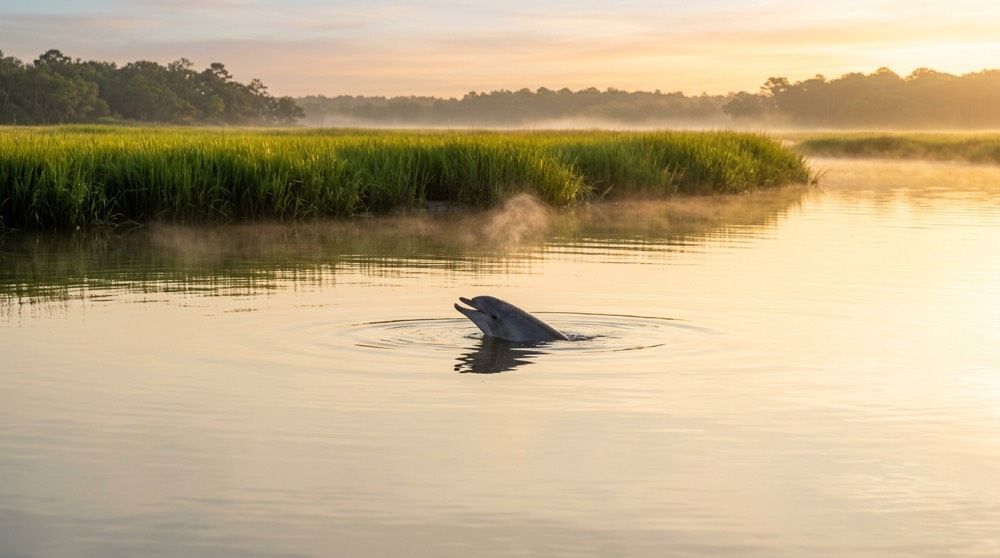
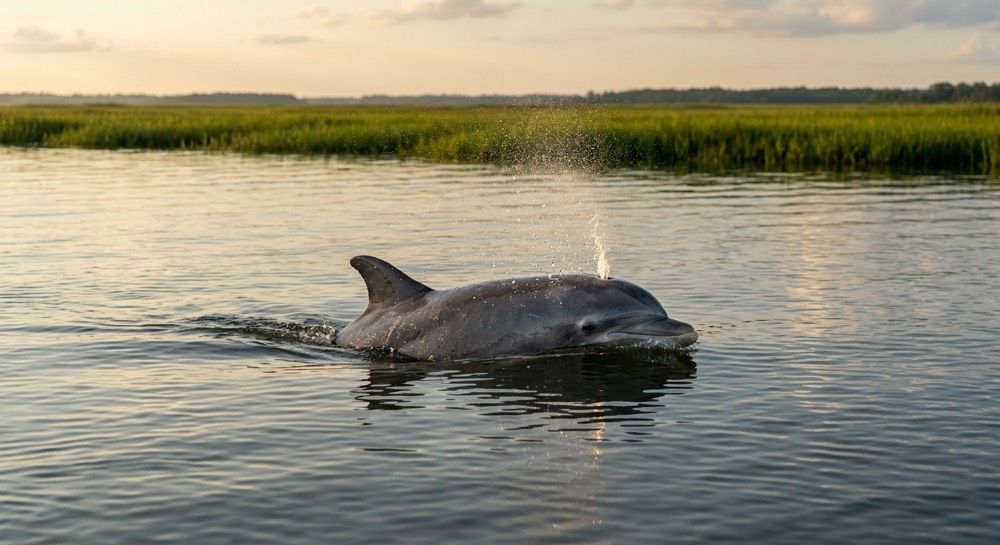
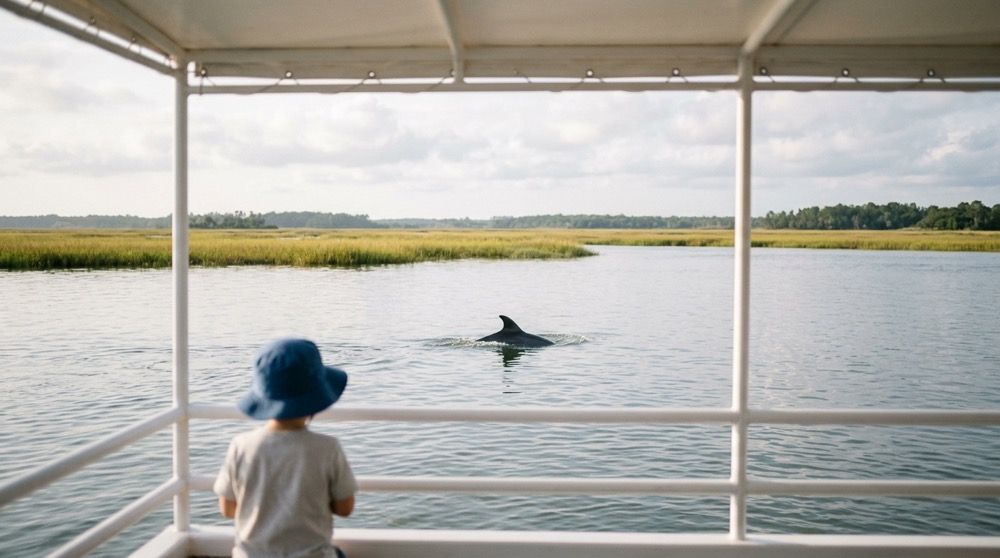
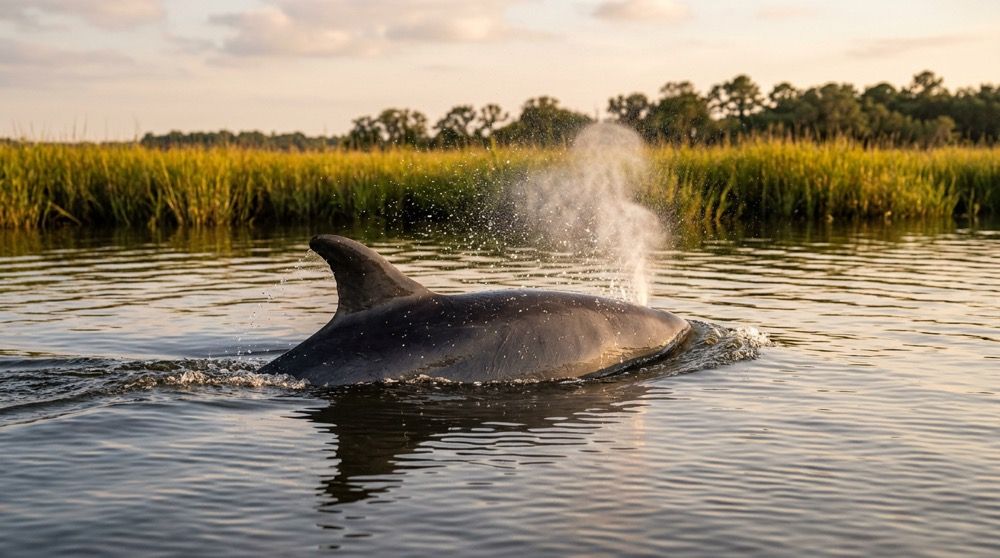
A Hilton Head dolphin tour is a guided boat trip — usually 90 minutes, occasionally longer for private charters — through the tidal creeks and sound waters that surround Hilton Head Island. The goal is straightforward: get you close enough to a pod of wild Atlantic bottlenose dolphins that you can see their dorsal fins break the surface, hear them exhale, and watch how they actually move in their home water.
It's not an aquarium. Nothing's scripted. The dolphins are wild residents of the Lowcountry, doing what they do every day whether or not a tour boat is watching. That's the whole appeal. You're a guest in their water for an hour and a half, not the other way around.
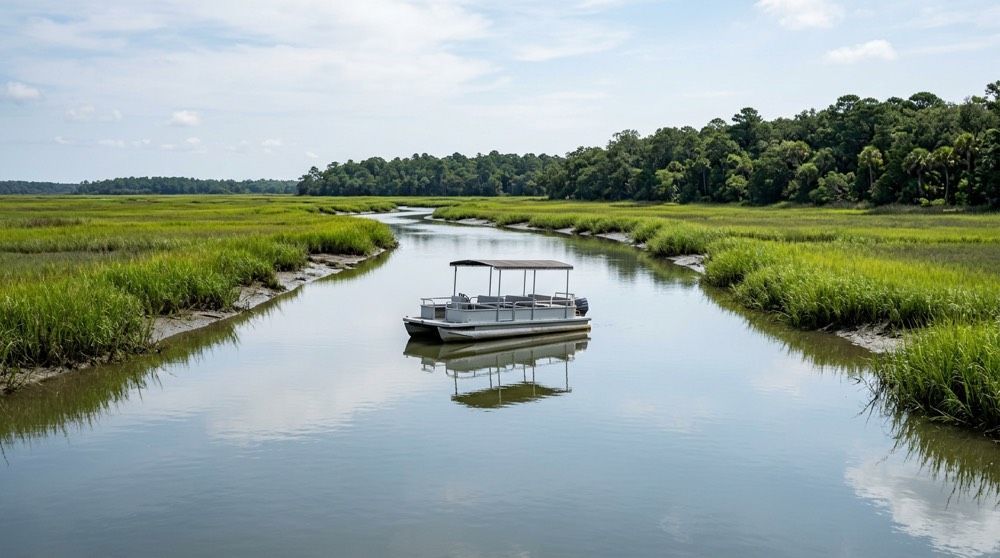
Our tours leave from Broad Creek, the tidal waterway that cuts inland from Calibogue Sound and is home to a long-established resident dolphin population. Broad Creek is the more intimate way to see them — narrower water, closer shorelines, and a wildlife mix that goes well beyond just the dolphins. It's also a big part of why our sightings are so reliable: the resident pods feed and travel through this creek every day, and we often spot fins from the dock before we ever cast off.
Why Broad Creek Is Different
Broad Creek is a tidal estuary, which is a fancy way of saying it's a brackish waterway where freshwater from inland meets salt water from the Atlantic. That mix supports an incredible amount of life — fish, shellfish, shorebirds, wading birds, and the dolphins that feed on all of it.
The dolphins you see on a Broad Creek tour aren't passing through. Most of them live here year-round. Researchers at the University of South Carolina Beaufort have been photographing and identifying individual dolphins in these waters for years, tracking them by the unique nick patterns on their dorsal fins and giving them names that local guides know by heart. When your captain spots a particular dolphin and tells you which one it is, that's not a sales pitch — that's local knowledge built over decades of being on this water.
The creek itself is beautiful in a way that surprises a lot of first-time visitors. You'll cruise past shoreline lined with spartina grass — the same marsh grass that holds the Lowcountry coastline together — and past oyster beds exposed by the tide, with great blue herons standing motionless on the mud. Some of the more impressive waterfront homes on the island are visible from the creek, including properties in Long Cove, Wexford, and Spanish Wells Plantations. Depending on how far you head out, you might also catch sight of the Harbour Town Lighthouse, Daufuskie Island in the distance, or the Savannah River Bridge on a clear day.
What You Can Expect to See
Dolphins are the headline act, but they're not the whole show.
Dolphins
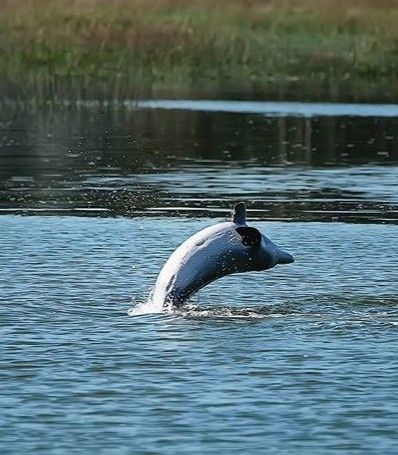
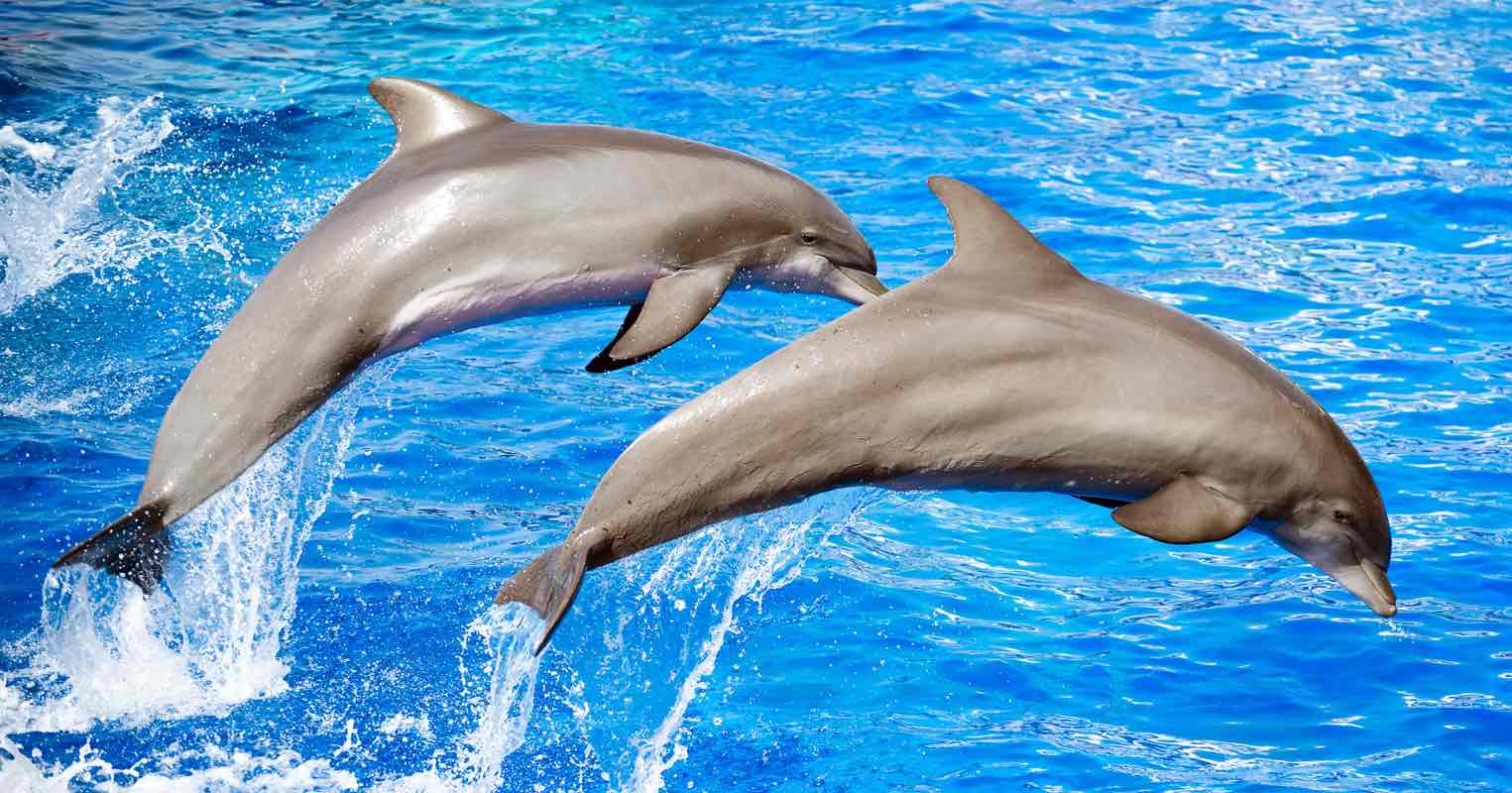
Atlantic bottlenose dolphins are the main species you'll encounter. They typically travel in pods of three to ten, sometimes more. You'll often see them surfacing in coordinated patterns — one dolphin coming up, then another, then a third — as they breathe between dives. Adults are six to twelve feet long, and the calves, when you spot them swimming close to their mothers, are surprisingly small. Bottlenose dolphins eat about five percent of their body weight each day — roughly fifteen to thirty pounds of fish, squid, and crustaceans — which is one reason they're constantly on the move.
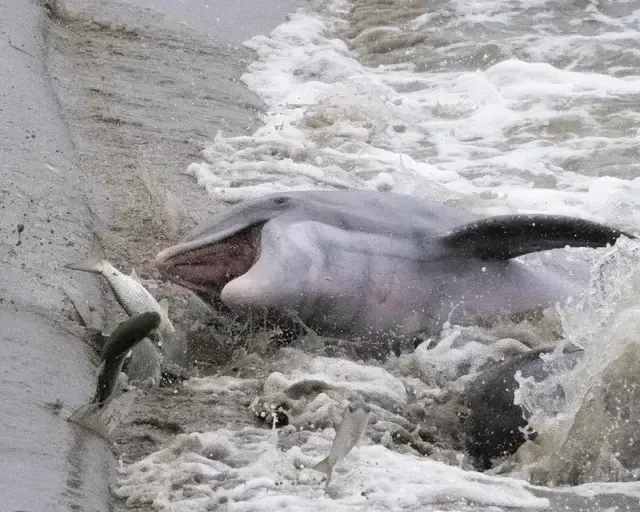
If you're lucky, you might see what biologists call strand-feeding. It's a foraging technique unique to a small number of Lowcountry dolphin populations, where a coordinated group rushes a muddy creek bank, uses their bow wave to push fish onto the shore, and then briefly throws themselves onto the mud to grab their meal before sliding back into the water. It's one of the more unusual hunting behaviors in the entire dolphin world, and South Carolina is one of the only places it happens.
Wading Birds and Shorebirds
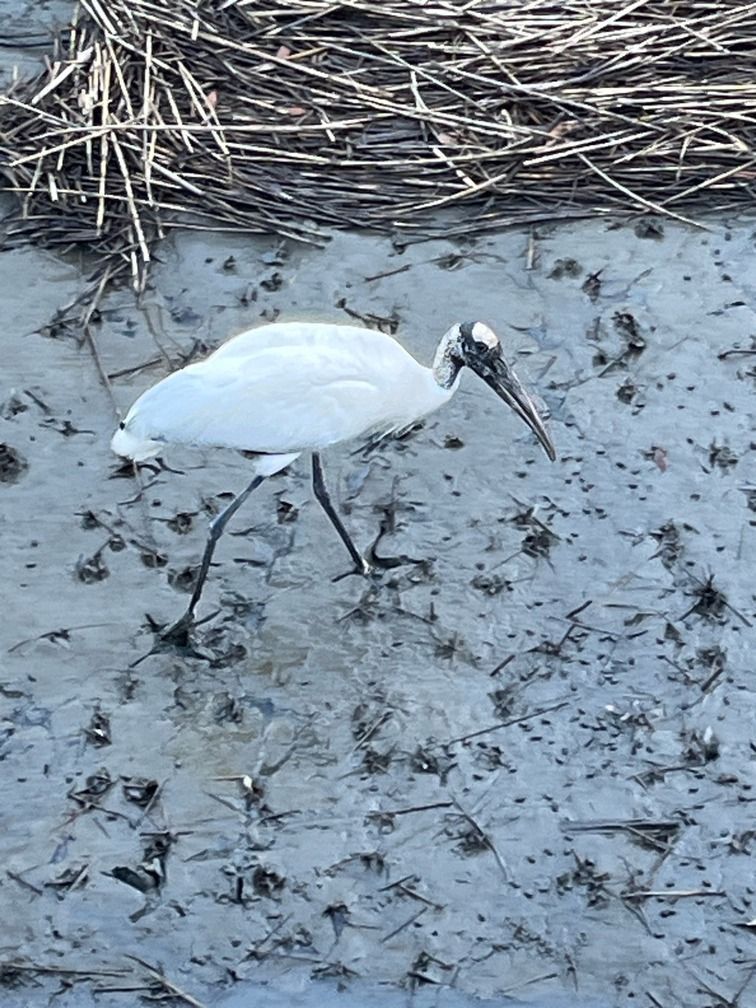
The salt marsh is a birder's paradise even if you didn't know you were a birder. On a typical 90-minute tour you'll likely see great egrets, snowy egrets, great blue herons, brown pelicans, osprey, double-crested cormorants, and oystercatchers. Bald eagles aren't unusual either — there's a healthy population in Beaufort County, and they nest along the coast. Some tours have spotted wood storks, anhingas, and roseate spoonbills depending on the season and the route.
Other Marine Life
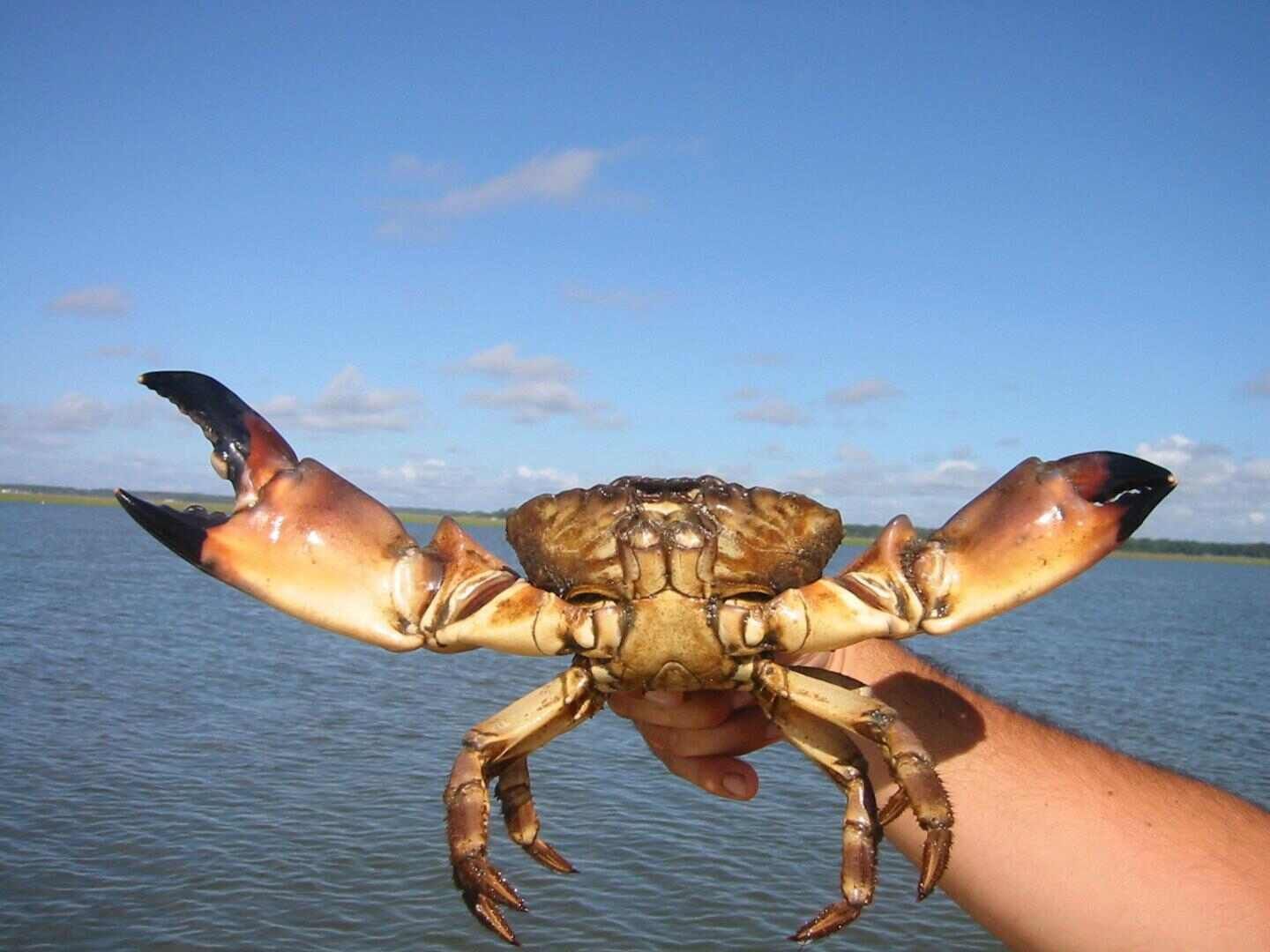
Sea turtles surface occasionally, particularly in warmer months. Jellyfish drift through in waves seasonally. Stingrays glide along the shallower bottoms. Blue crabs and shrimp are constantly visible in the creek bottom when the water is clear. If the captain spots something interesting, they'll usually slow down so you can take a look.
When to Go
Hilton Head dolphin tours generally run from spring through fall, with the heart of the season being June through September. There are differences between the seasons worth knowing about before you book.
Early Season (March through May)
Cooler water, fewer tourists, lighter booking volume. Dolphins are present but slightly less active in cooler water, and you may need a light jacket on a morning tour. The advantage: better availability, often a quieter boat, and easier sunset views since the sun sets earlier.
Peak Season (June through August)
The classic Hilton Head experience. Warm water, active dolphins, abundant birdlife, late sunsets. Tours fill up early — booking a week or more in advance is wise, especially for sunset cruises and weekends. Bring water, sunscreen, and a hat. Mornings are slightly cooler and the light is better for photos.
Late Season (September through Mid-October)
Often the best month for dolphin watching if you want to dodge the heaviest crowds. The water is still warm, dolphin activity is high, and the tourist volume tapers after Labor Day. Sunsets get earlier, which means you can pair a dolphin tour with dinner without it running late.
Off-Season (Late October through February)
We run year-round, and many visitors are surprised to learn the dolphins stay too. Activity is lower in the coldest stretches and the weather is cooler, but on a mild winter day a quiet creek to yourself is its own kind of tour. Several other operators close for the season — we don't.
Time of Day
Mornings (around 9 to 11 a.m.) and late afternoons (4 to 6 p.m.) tend to be when dolphins are most actively feeding, since they follow the tides and the schools of fish moving with them. Sunset cruises pull double duty: you get the dolphin activity of late afternoon plus the visual payoff of a Lowcountry sunset over the water. The downside is that sunset tours sell out fastest, so book early.
Choosing the Right Tour for Your Group
There are a few different ways to spend your time on the water, and the right one depends mostly on who you're traveling with.
Families with Young Children
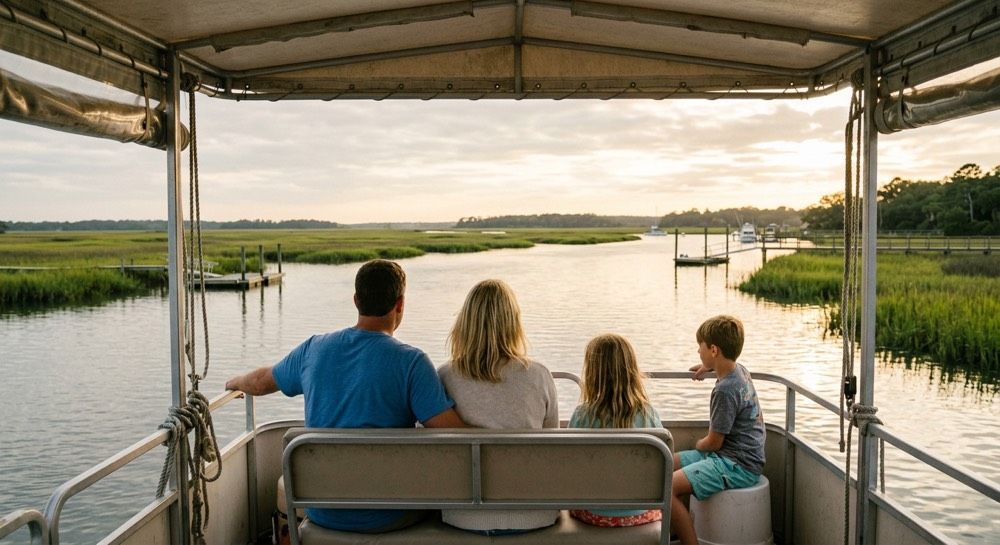
A shorter tour (our 90-minute daytime cruise is the sweet spot), shaded seating, and easy access to a restroom make all the difference with little ones. The narration matters a lot here, too — our captains pitch the educational content at multiple age levels, which keeps a five-year-old engaged without boring the adults. A smaller boat with a smaller group is a better experience than a packed double-deck cruise ship, especially for kids who need to move around. Our Wee Ones pricing covers ages 2–11 at under $6, and under 2 ride free.
Families with Teenagers or Older Kids
The daytime and sunset tours both work well. The chance to point out specific dolphins by name, talk about strand-feeding behavior, and connect what they're seeing to actual marine science can turn a tour from "boat ride" into "the best part of the trip" for a curious kid.
Couples and Adults-Only Groups
The sunset cruise is usually the right call. The photography is dramatically better in golden-hour light. If the trip is for a special occasion — anniversary, proposal, milestone — a private charter is worth the upgrade. You'll have the boat to yourselves, can request a customized route, and skip the rhythm of a shared tour.
Larger Groups, Reunions, and Events
Our private charters aboard the Splash and Prince of Tides scale better than booking out a public tour, and they're priced per boat rather than per person — which makes them surprisingly competitive for a group of six or more. Custom timing, a custom route, and a dedicated captain are part of the deal.
Guests with Mobility Considerations
Just ask — we'll give you a straight answer about whether our dock and boat will work for someone using a walker, wheelchair, or who has trouble with steps. A private charter often gives us more flexibility to make it comfortable.
What to Bring
Dress in layers, even in summer — the breeze on the water cools you down faster than you might expect, especially on a sunset tour. Sunscreen is mandatory, even on overcast days, because reflected light off the water doubles the UV exposure. A hat is helpful for the same reason. Closed-toe shoes or sandals with a back strap are better than flip-flops on a moving boat.
Bring water, especially on warm afternoons. If you're prone to motion sickness, take whatever you usually take about thirty minutes before boarding — the inshore water on a 90-minute Broad Creek tour is usually flat, but on a breezy day it can chop up a little.
Cameras and phones are welcome. The dolphins move quickly, so if you're shooting on a phone, set it to burst mode when you see fins coming up — you'll get one or two good shots out of a sequence of ten that you'd miss on a single tap. If you have a real camera with a longer lens, that's a meaningful upgrade for photos, but it's far from required. And don't forget to put the phone down now and then — the best moments are the ones you actually watch.
How Bookings Work
We take reservations online and by phone, and during peak season the smart move is to book at least a few days in advance. Sunset cruises and weekends fill up the fastest. If your travel dates are flexible, midweek mornings are easier to book and often less crowded. We run seven days a week, year-round — including Sundays, when several other operators are closed.
Our 90-minute daytime cruise is our standard cruise. The
sunset cruise is a small premium over the daytime tour. Private charters are priced per boat rather than per person, which makes them a strong value for groups of six or more compared to booking individual seats.
And there's the guarantee: see dolphins on your tour, or your next tour is free. It's a promise we can make because the resident pods are on these waters nearly every day of the year, and after three decades on Broad Creek we know exactly where to find them at any tide. When you're comparing operators, look for a guarantee backed by that kind of local knowledge rather than hope.
What Makes a Good Dolphin Tour
After being on this water for decades, here are the things that actually separate a great Hilton Head dolphin tour from an average one.
Local Captains Who Know the Individual Dolphins
The captain who can tell you "that one's a regular we've been watching for years, and her calf is right there next to her" is giving you something you can't get from a boat that's brand-new to the water. Tenure on the creek matters.
Boats Built for Viewing, Not Just Capacity
A smaller boat with a stable platform and clear sightlines beats a packed double-deck ship if your goal is to actually see the dolphins well. Crowded boats mean limited viewing angles and a slower pace getting people back to the dock.
Narration That Matches the Water
The best guides talk about what's actually happening in front of you — that dolphin's behavior, that bird in the marsh, the tide we're working with — not just a generic script. You can tell within five minutes whether your captain is reading from memory or reading the water.
A Family-Friendly Atmosphere That Genuinely Means It
"Family-friendly" gets stamped on a lot of marketing copy. The real test is whether the tour is actually enjoyable for the adults too, whether kids are welcomed rather than tolerated, and whether the boat has the practical things — restroom, shade, room to move — that make 90 minutes with kids work.
The Guarantee Backed by Experience
A dolphin guarantee is meaningful when the operator has been on the water long enough to actually know where the dolphins are at different tides and times of day. A new operator offering the same guarantee is making a promise on hope. A long-tenured local family is making one on knowledge.
About Dolphin & Nature Tour
Dolphin & Nature Tour has been running guided dolphin and nature cruises out of Broad Creek since 1993, when Captain Sonny Compher founded it as a small family business. More than thirty years later it's still family-run — today by Sonny's nephew, Capt. Ted Compher, and his wife Katie — which is unusual in this market and shows up in ways you can feel on the water.
The fleet runs a
daytime dolphin and nature tour, a
sunset dolphin cruise, and
private charters aboard the Splash and Prince of Tides, all from our longtime home dock on Broad Creek. Cruises are narrated by Coast Guard-licensed captains who know the creek's dolphin pods individually, the local nesting birds, and the tide patterns that govern wildlife activity on any given day.
The guarantee is straightforward: see dolphins on your tour, or get a free return cruise. After decades of running tours on these waters, that promise is backed by knowing exactly where the dolphins tend to be at different tides and times of day. It's a guarantee we rarely have to honor, because Broad Creek's dolphins show up nearly every trip out.
Ready to Book?
If you're ready to plan your dolphin tour, the next step is to pick the tour that fits your group: a daytime 90-minute cruise, a sunset cruise, or a private charter for special occasions. Each one is built around the same core experience — Broad Creek's resident dolphins in their natural water — but the timing, the group size, and the atmosphere are different.
You can check schedules and book online, or give us a call. Tickets for sunset cruises and weekend tours tend to sell out the fastest during peak season, so the earlier you book, the better your timing options.
Have questions before you book? Reach out. A good dolphin tour operator should be willing to help you figure out which tour is right for your group before you put any money down. That's the kind of conversation that starts long-term guests — and it's the kind of conversation Hilton Head's longest-tenured tour family has been having with visitors for thirty-plus years.
Capt. Ted Compher is the owner of Dolphin & Nature Tour in Hilton Head, South Carolina. He has spent thirteen years running tours on the island's waters — ten of them as a licensed captain — after first learning the creeks as a teenage deckhand for the family business his uncle founded in 1993. An avid fisherman with deep knowledge of the local waterways and wildlife, Ted lives on Hilton Head with his wife Katie, their two daughters, and two Boykin Spaniels who are never far from the boat.