Bottlenose Dolphins of Hilton Head: A Local Field Guide
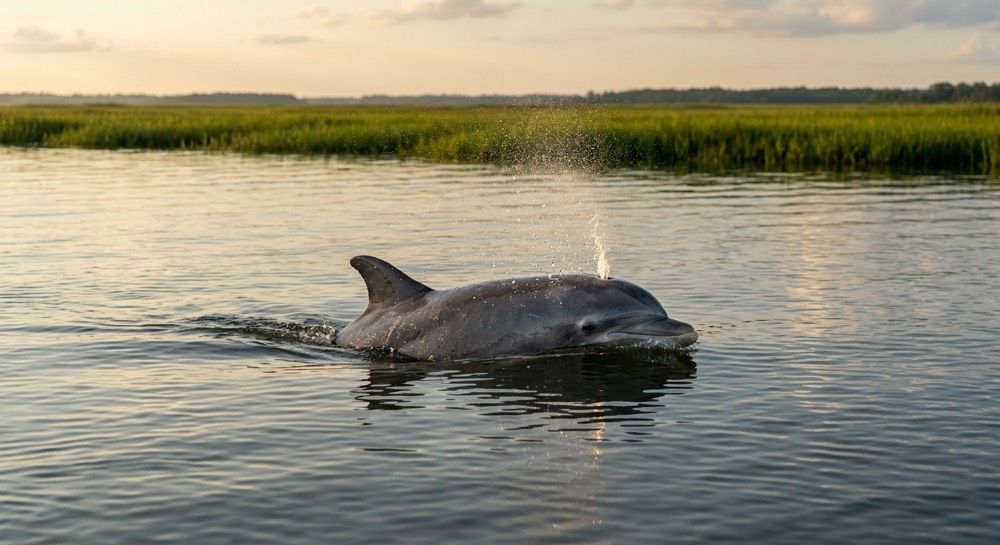
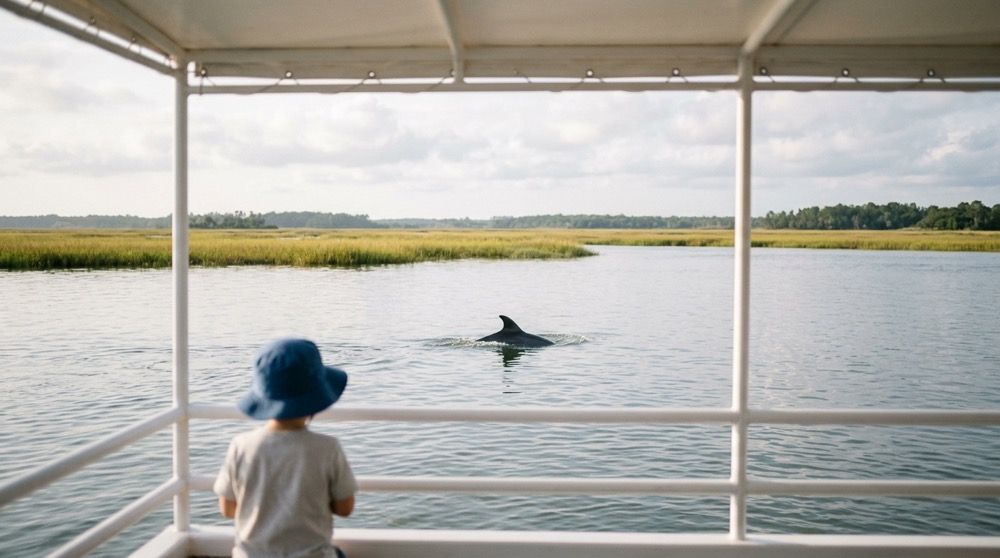
The bottlenose dolphins around Hilton Head are Atlantic bottlenose dolphins (Tursiops truncatus), a population that lives in the warm, food-rich tidal waters of Broad Creek and Calibogue Sound year-round. Many are the same individuals season after season, which is why local captains can recognize them from the shape of a single dorsal fin. Get to know them, and every tour becomes a reunion.
If you have ever watched a dolphin surface off Hilton Head Island and wondered what kind it was, how long it lives, or whether it is the same animal you saw last summer, this guide is the anchor for the answers. It is the education hub for our dolphin cluster — a plain-language field guide to the wild marine mammals you will meet on the water, written from decades of first-hand observation on Broad Creek.
What kind of dolphins live around Hilton Head Island?
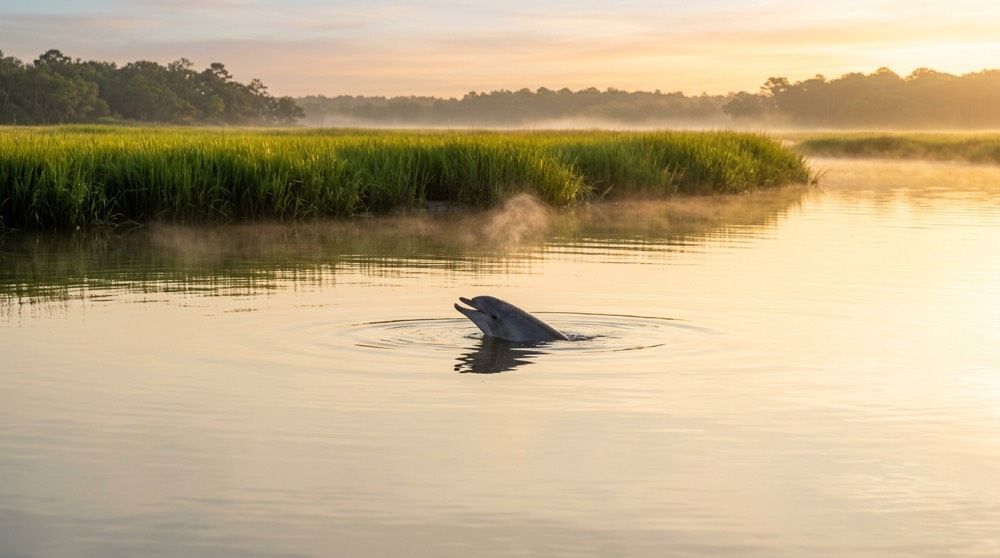
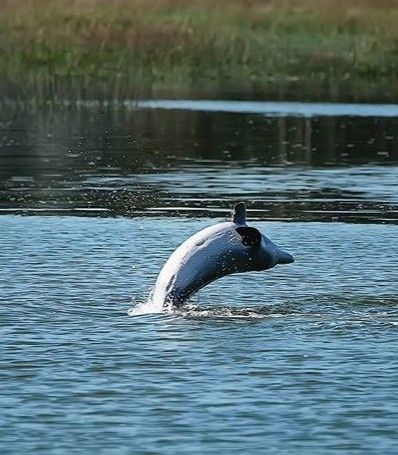
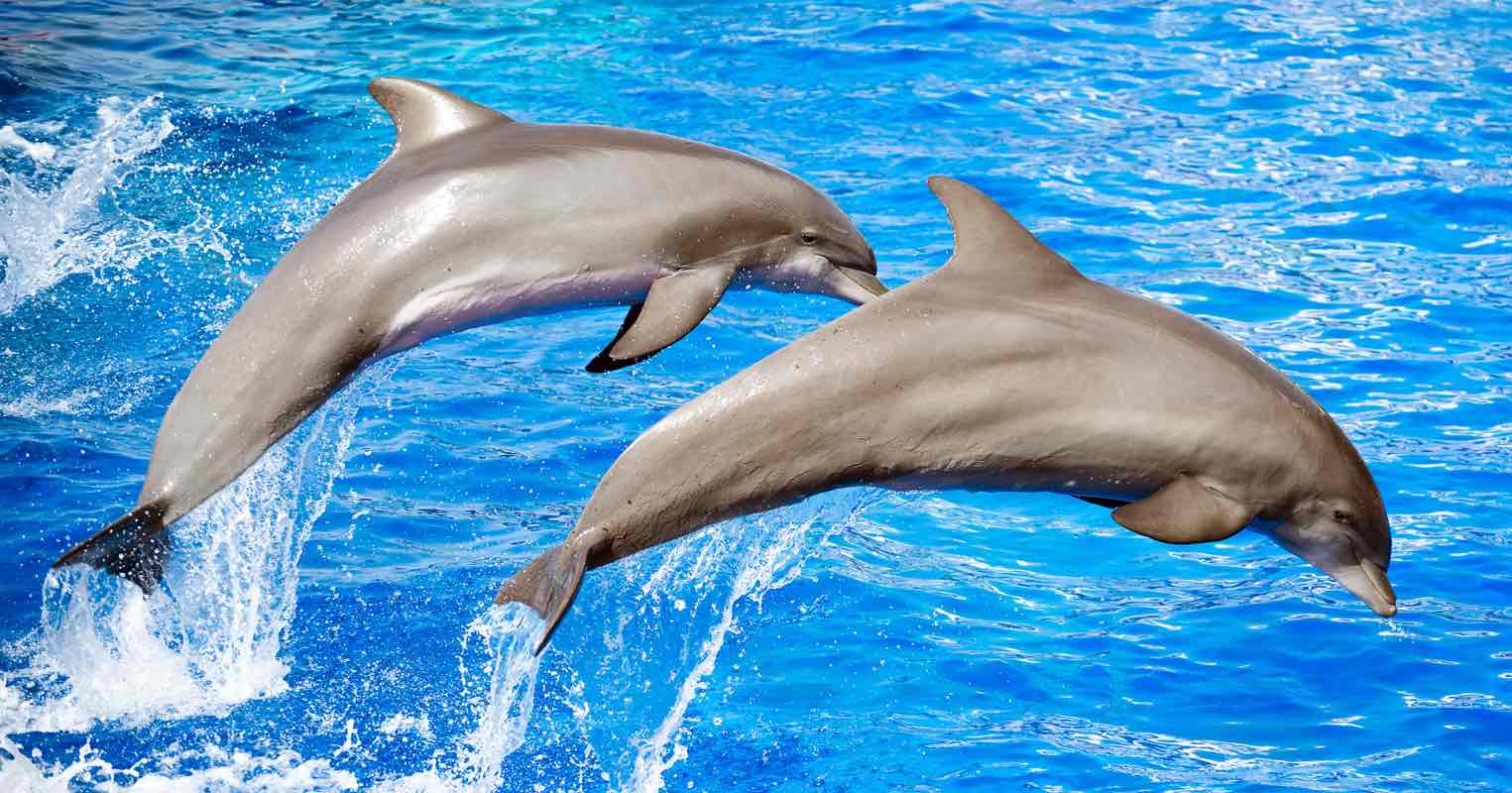
The dolphins you see on Hilton Head are common bottlenose dolphins, also called Atlantic bottlenose dolphins — the same species featured in aquariums and nature documentaries worldwide. They are the only dolphin species you are likely to encounter inside the island's tidal creeks and sounds, and they are permanent neighbors rather than occasional visitors.
Bottlenose dolphins are large, powerful animals. According to NOAA Fisheries, common bottlenose dolphins grow to between 6 and 13 feet long, weigh from 300 to 1,400 pounds, and live 40 to 60 years in the wild. That lifespan matters locally: a dolphin a child spots on a summer tour could still be cruising Broad Creek when that child brings their own kids back decades later. The estuary is not a stopover for them — it is home.
The name comes from the animal's short, thick "bottle-shaped" snout, called the rostrum. Their curved mouths give them the permanent half-smile people love, though a dolphin's expression tells you nothing about its mood — the shape is simply anatomy. To go deeper on how a dolphin's body is built, from rostrum to fluke, see our companion article on how a dolphin's body is built.
Where do Hilton Head's dolphins live and feed?
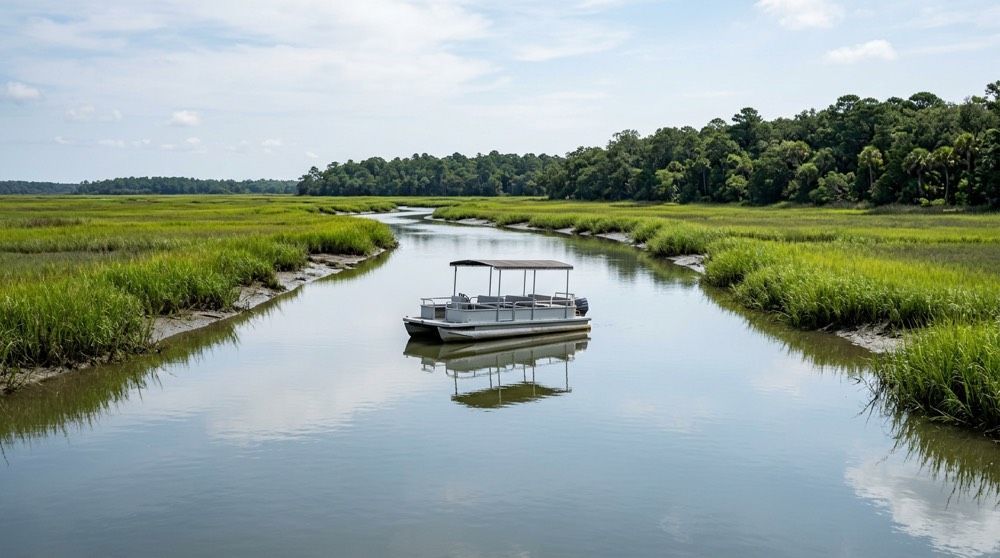
Hilton Head's dolphins live in the estuary — the mixing zone where the Atlantic Ocean, Broad Creek, Calibogue Sound, and a maze of tidal salt-marsh creeks meet. This brackish, nutrient-rich water is one of the most productive habitats on the East Coast, and it keeps dolphins close to shore where visitors can actually see them.
Estuaries like the one wrapping Hilton Head Island act as nurseries for shrimp, mullet, menhaden, and countless other fish. Bottlenose dolphins follow that food, hunting the same creeks the tides refill twice a day. Because the prey is reliable and the water is protected, a subset of these dolphins behaves as a resident population — staying in the same home range instead of ranging far offshore. That is exactly why sightings here are so dependable, a point we cover in depth in our complete guide to Hilton Head dolphin tours.
The tide is the clock these dolphins live by. On a falling tide, fish get flushed out of the flooded marsh grass and funneled into the creek channels, and dolphins position themselves to intercept the moving buffet. Learning to read the water the way they do is half the fun of a nature tour.
How can you tell individual bottlenose dolphins apart?
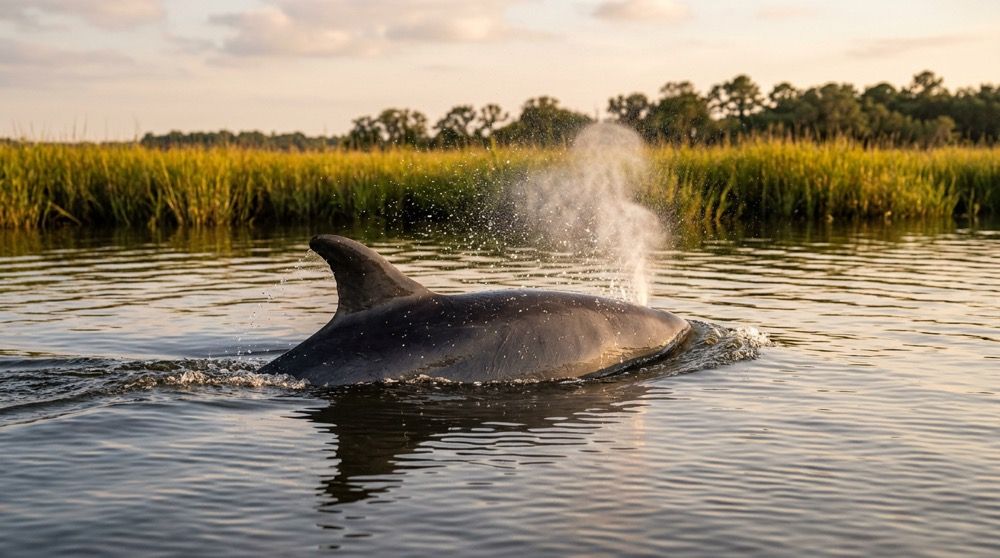
You tell dolphins apart the same way marine biologists do: by their dorsal fins. Every bottlenose dolphin's dorsal fin carries a unique pattern of nicks, notches, and scars earned over a lifetime, and those marks work like a fingerprint that lasts for years.
This technique is called photo-identification, and it is the backbone of real dolphin science. Researchers photograph the left and right sides of a fin, catalog the shape of its trailing edge, and match new sightings against the catalog to track where a specific animal goes and how long it lives. On Broad Creek, the same distinctive fins reappear so often that experienced captains name individuals and can point out a dolphin they have followed for years.
For guests, learning to fin-spot turns a passive boat ride into active wildlife watching. Once you notice a torn tip or a deep notch on one animal, you start recognizing that dolphin on your own — and you understand, in a single glance, that these are individuals with histories, not interchangeable gray shapes in the water.
How do Lowcountry bottlenose dolphins behave?
Lowcountry dolphins are highly social, intelligent hunters that live in loose, shifting groups called pods. Pod membership changes constantly as animals split off to feed and rejoin to travel, a flexible social structure scientists call "fission-fusion." Mothers and calves form especially tight, lasting bonds.
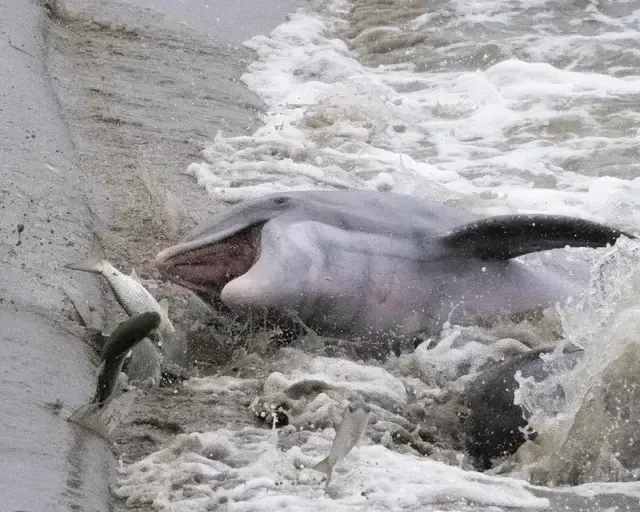
Their most remarkable local behavior is strand feeding, a specialty of bottlenose dolphins in the salt marshes of South Carolina and Georgia. Working together, dolphins herd a school of fish toward a muddy bank, then rush forward in a coordinated wave that pushes the fish — and briefly the dolphins themselves — right up onto the exposed mud before they slide back into the water. It is one of the few places on Earth where dolphins deliberately leave the water to feed, and it is a learned behavior passed from mother to calf.
Dolphins also communicate constantly through sound. They produce clicks for echolocation — bouncing sound off objects to "see" in murky water — along with whistles and burst-pulse squawks used socially. Each dolphin even develops its own signature whistle, a personal call that functions much like a name. On a quiet tour, you may hear these sounds through the hull long before you understand the full conversation.
Are the dolphins around Hilton Head protected by law?
Yes. Every wild dolphin in U.S. waters is protected under the Marine Mammal Protection Act, which Congress passed in 1972 to reverse steep declines in marine mammal populations caused by human activity, according to NOAA Fisheries. The law applies fully to the dolphins of Broad Creek and Calibogue Sound.
Under the MMPA it is illegal to feed, touch, chase, or otherwise harass a wild dolphin. NOAA defines harassment as any act with the potential to injure a marine mammal or disrupt its natural behaviors — and feeding is specifically prohibited because it teaches dolphins to associate boats and people with food, which changes their behavior and puts them in danger. That is why a responsible operator never chases or bribes dolphins; the animals approach on their own terms, or they don't.
Ethical viewing is not just the law — it is what keeps the population healthy enough to watch for generations. A tour that respects the rules is one where the dolphins keep coming back.
How can you see wild bottlenose dolphins the right way?
The best way to see Hilton Head's dolphins is from a small, respectful, captain-guided nature tour that goes to the dolphins' home water and lets them set the terms of the encounter. You get a real education alongside the sighting, and the dolphins stay wild.
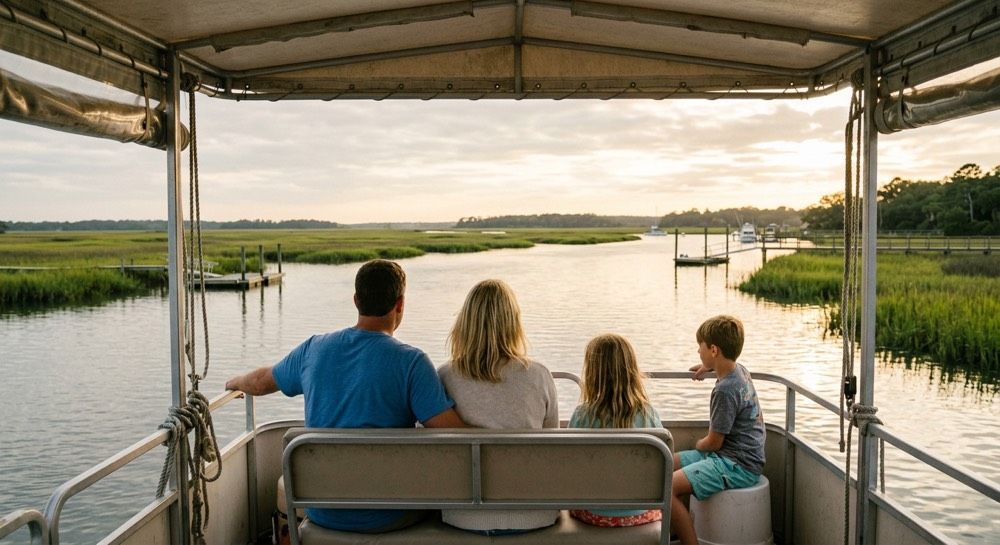
A good tour reads the tide, moves slowly through the creeks, and gives you context — which pod you're watching, why they're feeding where they are, and how to spot the next surfacing. First-time visitors often don't know what a tour actually involves, so we wrote a full walkthrough: what to expect on your first dolphin tour. It covers timing, what to bring, and how the guarantee works.
If you're ready to meet these animals in person, book our 90-minute Dolphin & Nature Tour [https://www.hiltonheadtours.com/dolphin-tour-details] out of Broad Creek Marina. Every trip carries a wild-dolphin sighting guarantee — if the dolphins don't show, you ride again free.
Do Hilton Head's dolphins have calves here?
Yes — the estuary around Hilton Head serves as a nursery, and resident females raise their young in the same protected creeks visitors explore. Bottlenose dolphins carry a single calf for about 12 months, and births in the region cluster in the warmer months when food is most abundant.
A newborn calf sticks close to its mother's side, drafting in her slipstream to save energy, and nurses for well over a year — sometimes staying with mom for three to six years while it learns to hunt. On the water you can often pick out a mother-calf pair by the tight, synchronized way they surface together, the calf a smaller mirror of the adult. Watching a young dolphin learn to strand-feed alongside its mother is one of the most memorable sights a Lowcountry tour can offer, and a vivid reminder that these are the same families returning to the same water year after year.
Frequently asked questions about Hilton Head's dolphins
What species of dolphin lives around Hilton Head Island?
The dolphins around Hilton Head Island are common bottlenose dolphins (Tursiops truncatus), also called Atlantic bottlenose dolphins. It is the only dolphin species regularly found inside Broad Creek, Calibogue Sound, and the island's tidal marsh creeks. They are a coastal, estuary-loving population that stays close to shore, which is exactly why they are so reliably seen on local tours.
How long do Atlantic bottlenose dolphins live?
Common bottlenose dolphins live 40 to 60 years in the wild, according to NOAA Fisheries. Because Hilton Head's dolphins are largely resident animals that stay in the same home range, many of the individuals seen today have been using Broad Creek and Calibogue Sound for decades — and local captains can recognize the same dorsal fins year after year across much of that lifespan.
Do the same dolphins stay in Broad Creek year-round?
Many of them do. Hilton Head sits within the range of a resident bottlenose dolphin population that stays in the estuary throughout the year rather than migrating far offshore. The tidal creeks provide steady food and shelter, so the same recognizable individuals reappear across seasons. This year-round residency is the main reason sightings on the island's protected waters are so dependable.
What do Lowcountry bottlenose dolphins eat?
Lowcountry bottlenose dolphins eat fish and squid, favoring the mullet, menhaden, shrimp, and other prey that fill Hilton Head's estuary. They hunt on the tides, intercepting fish flushed out of the flooded marsh. In South Carolina's salt marshes they also strand-feed — herding fish onto mud banks and briefly sliding out of the water to grab them, a cooperative behavior taught from mother to calf.
What does U.S. law say about feeding or approaching wild dolphins?
Feeding, touching, or harassing wild dolphins is illegal under the Marine Mammal Protection Act, passed in 1972 and enforced by NOAA Fisheries. Feeding is banned because it changes dolphins' natural behavior and endangers them. NOAA asks the public to observe wild dolphins from a respectful distance and let the animals approach on their own — never to lure, chase, or hand-feed them.
Meet Hilton Head's dolphins for yourself
Reading about bottlenose dolphins is one thing; watching a resident pod strand-feed on a falling tide is another. Come see the animals in this guide in their own water. Reserve your 90-minute Dolphin & Nature Tour on Broad Creek — small boats, expert narration, and a wild-dolphin sighting guaranteed on every trip.
About the author: Ted Compher is the owner-operator of Dolphin & Nature Tour on Hilton Head Island, carrying forward the family business founded by his uncle, Captain Sonny Compher, and aunt Mary Ann.