What Do Dolphins Eat? How Lowcountry Bottlenose Dolphins Hunt
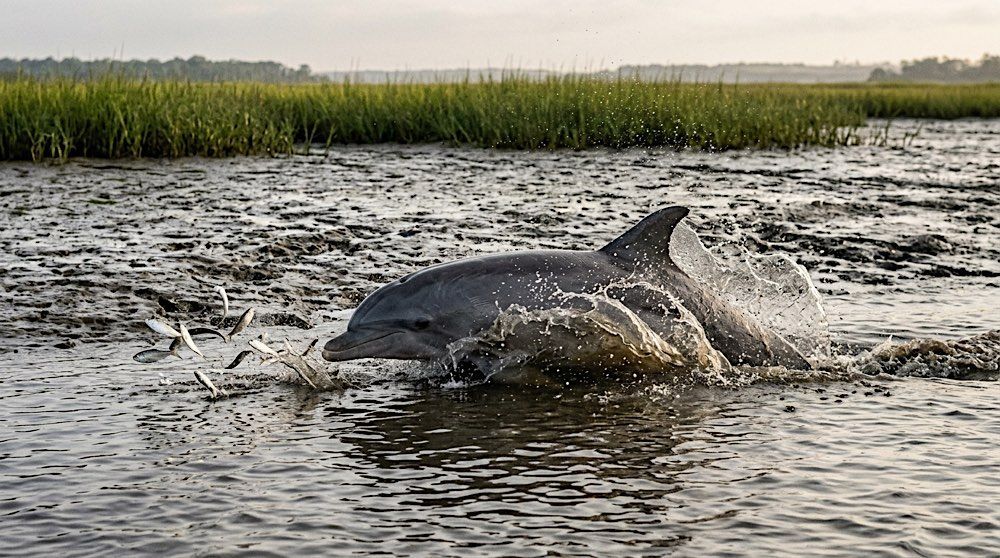
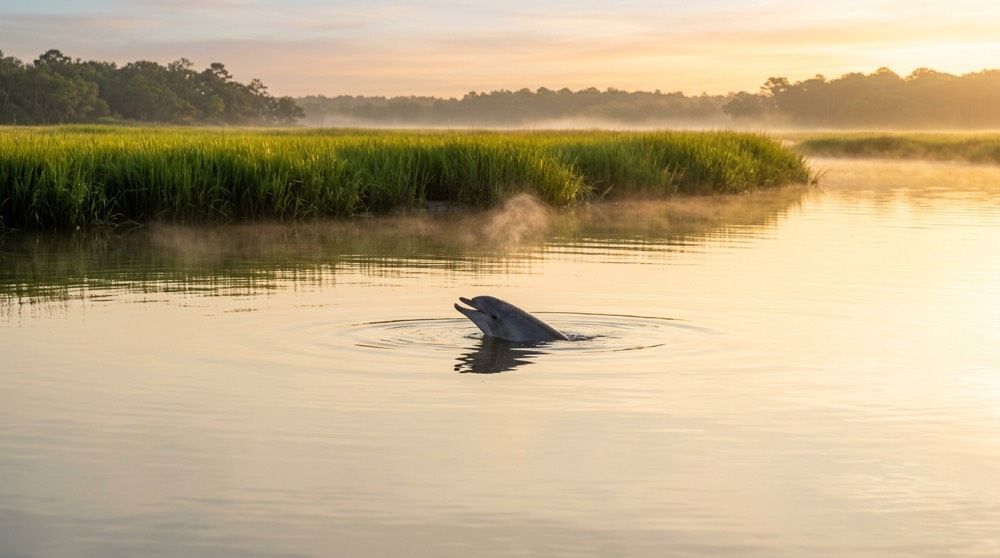
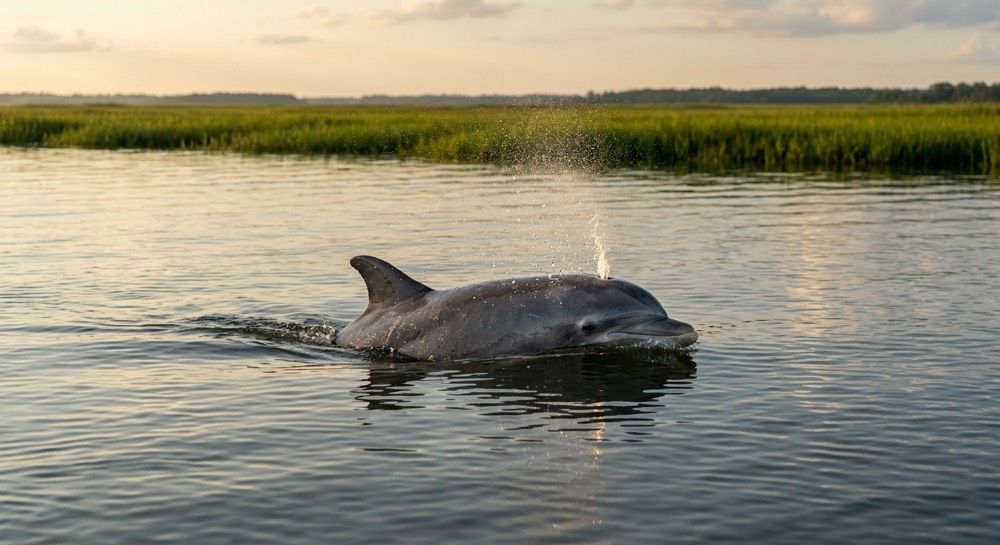
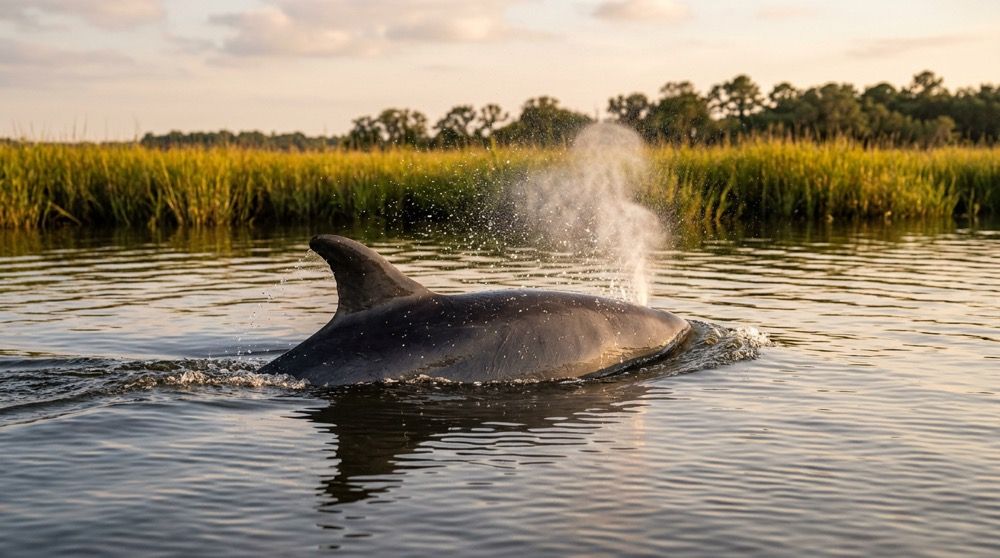
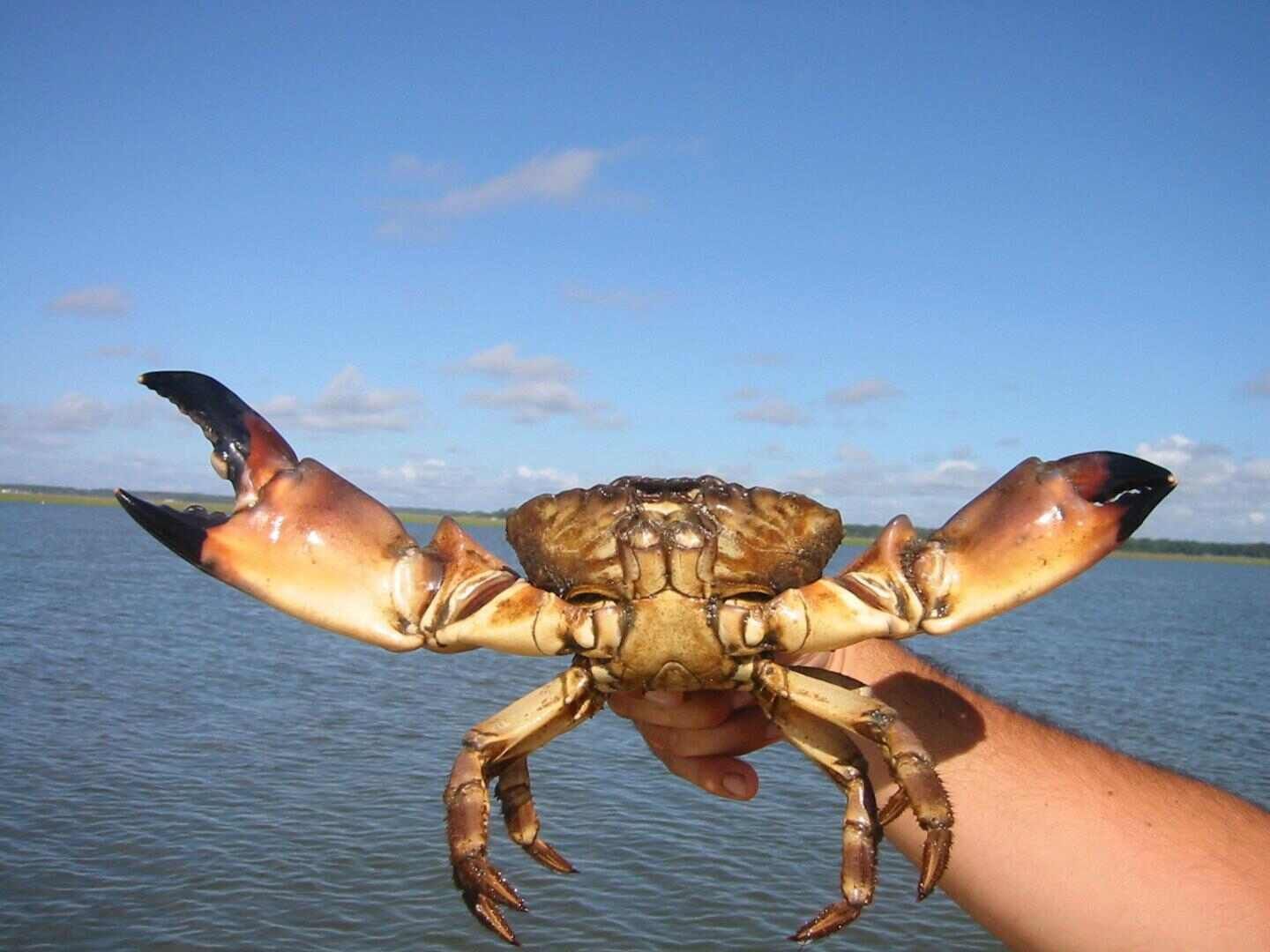
What do dolphins eat? Bottlenose dolphins eat mostly fish, plus squid, shrimp, and crabs. Around Hilton Head, that means small estuary fish such as Atlantic croaker, star drum, spot, and mullet. Lowcountry dolphins find their prey by sound, hunt as a team, and time their meals to the tides, sometimes driving fish right up onto the mud banks.
The Fish at the Top of the Menu
Fish make up most of a Lowcountry dolphin's diet, and the favorites are small fish that live near the bottom of the estuary. Croakers and drums lead the list.
A 2026 study in the Journal of Cetacean Research and Management examined the stomach contents of 114 dolphins stranded in South Carolina between 2009 and 2014. Atlantic croaker turned up in 54% of them and star drum in 45%, making them the two most common prey species. Spot, silver perch, bay anchovy, hake, and squid also featured prominently.
On Broad Creek, we also watch dolphins chase mullet and menhaden, the silvery schooling baitfish that flash at the surface on a moving tide.
Squid, Shrimp, and Crabs Round Out the Diet
Dolphins are flexible eaters, so fish are only part of the story. According to NOAA Fisheries' bottlenose dolphin profile, bottlenose dolphins feed on fish, squid, and crustaceans such as crabs and shrimp.
The South Carolina Department of Natural Resources describes the same menu for the state's estuaries: fish, shrimp, crabs, and squid, caught with several different feeding techniques. To learn more about the dolphins themselves, start with our Bottlenose Dolphins of Hilton Head field guide.
How Do Dolphins Find Fish in Murky Water?
Dolphins find fish by sound. They use high-frequency echolocation, bouncing clicks off objects around them, and they also listen passively for the noises fish make, NOAA Fisheries explains.
That matters in Broad Creek, where the tidal water is often murky. A dolphin can "see" a croaker in cloudy water by sound alone. Once it has found its prey, it does not chew. NOAA notes that bottlenose dolphins grip a fish with their teeth and swallow it whole, head first, so the spines do not catch in their throats.
Strand Feeding: The Lowcountry's Signature Hunt
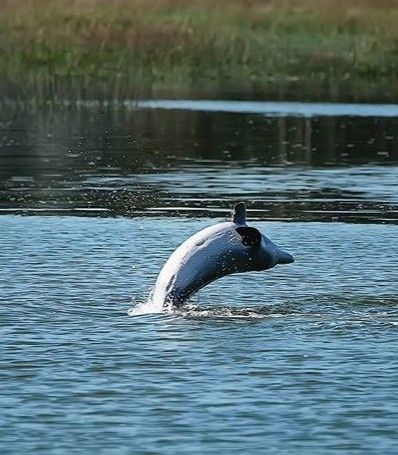
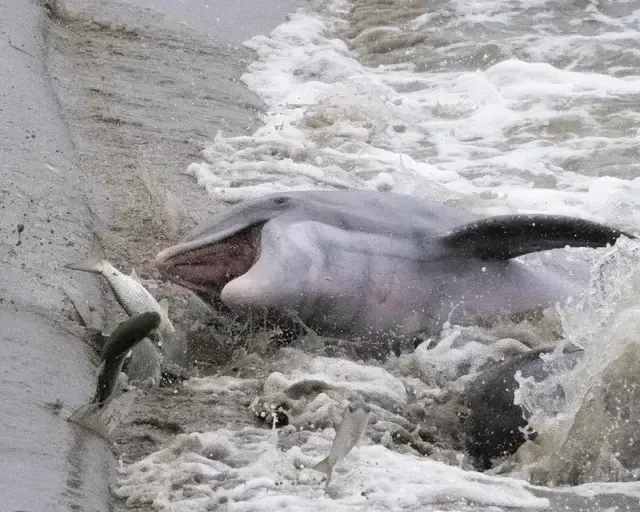
Strand feeding is a cooperative hunt in which dolphins push a school of fish onto a mud bank, then slide partway out of the water to grab them. It is rare worldwide, and the tidal creeks of South Carolina and Georgia are among the few places it happens.
A 2021 feature in the journal Oceanography describes dolphins herding mullet toward shore and heaving as much as two-thirds of their bodies onto the mud. At Captain Sam's Spit on Kiawah Island, the best viewing window is the four hours around low tide, when channels are narrowest. Calves learn the technique from their mothers.
We wrote about this behavior on our own waters in The Secret Feeding of Dolphins. It is opportunistic, so no tour can promise it.
Why Do Dolphins Follow Shrimp Boats?
Dolphins follow shrimp boats for an easy meal. The same Oceanography feature cites research showing that dolphins in Calibogue Sound, the water just off Broad Creek, feed on shrimp boats' discarded bycatch and on fish stirred up by the nets.
Feeding by people is a different matter. NOAA Fisheries warns that feeding wild dolphins is illegal under the Marine Mammal Protection Act and harmful, because dolphins learn to associate people with food. They begin begging near boats and taking bait off fishing lines, risking boat strikes and hooks. We never feed the dolphins; we watch them catch their own fish.
Watching Dolphins Hunt on Broad Creek
The best time to see dolphins hunt is on a moving tide, when fish are flushed out of the marsh grass and funneled into the creek channels. Our best time of day for dolphin watching guide explains how tides shape each departure.
Prey also explains where dolphins go through the year, a topic we cover in The Great Dolphin Migration. And if you spot a mother and calf feeding side by side, our post on viewing baby dolphins on our dolphin tour tells you what to look for.
Frequently Asked Questions
Do dolphins chew their food?
No. Bottlenose dolphins have plenty of teeth, but they use them to grip prey, not to chew. According to NOAA Fisheries, a dolphin swallows a fish whole and head first, so the fish's spines do not catch in its throat. The same goes for the croaker, drum, and mullet that Hilton Head's dolphins catch.
When do baby dolphins start eating fish?
Bottlenose dolphin calves begin eating fish at around six to seven months old, according to the South Carolina Department of Natural Resources. They keep nursing well beyond that; NOAA Fisheries says calves nurse for about 20 months and stay with their mothers for three to six years. During that time, calves learn local hunting skills, including strand feeding, by watching their mothers.
Does a dolphin's diet change with the seasons?
Yes. The 2026 South Carolina stomach-content study found that prey shifted through the year: spot peaked in summer, silver perch and bay anchovy in winter, hake in spring, and squid in fall. Dolphins also switched to more hake during a cold-water event in 2011. They follow whatever prey is most available to meet their energy needs.
Can you see dolphins feeding on a Hilton Head dolphin tour?
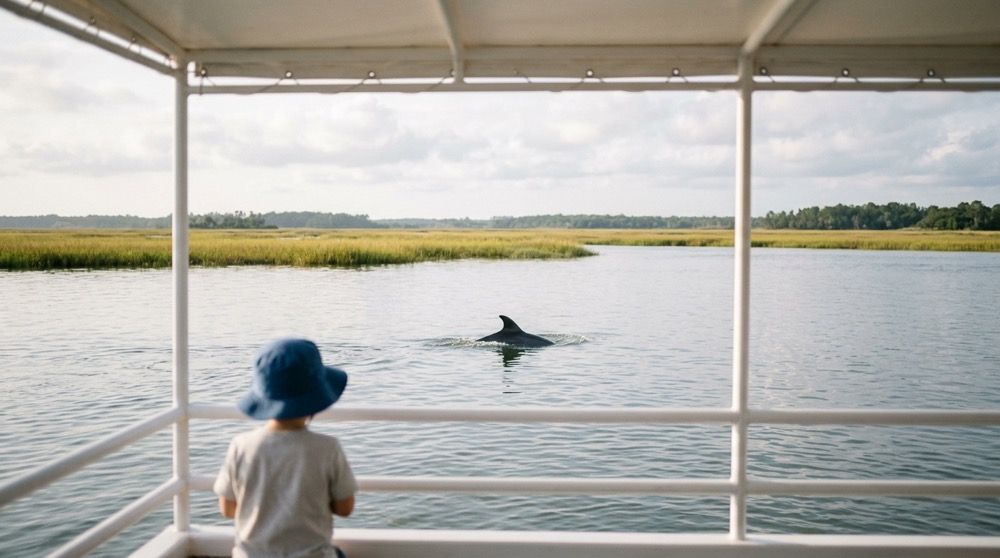
Often, yes. Broad Creek's resident dolphins feed throughout the day, so guests regularly see them chasing fish, splashing at the surface, or working a creek bank. Strand feeding depends on the tide and luck, so it is never guaranteed. What is guaranteed is a dolphin sighting on every tour, or a free ride at a later date.
See Lowcountry Dolphins Hunt for Yourself
Watching a pod work a Broad Creek mud bank beats any description. Compare our daytime and sunset options on our 3 Dolphin & Nature Tours page, then reserve your Broad Creek dolphin tour and meet the dolphins where they feed.
Capt. Ted Compher is the owner-operator of Dolphin & Nature Tour on Hilton Head Island, South Carolina, carrying forward the family business founded on Broad Creek in 1993 by his uncle and aunt, Captains Sonny and Mary Ann Compher. When he is not on the water, Ted is usually on the dock at 18 Simmons Road, talking dolphins, boats, and Lowcountry tides with anyone who will listen.